winni peg general strike

  • Subscribe to our RSS feed.
  • Twitter
  • StumbleUpon
  • Reddit
  • Facebook
  • Digg

Wednesday, January 12, 2011

#23 The Great Escape (1963)

Posted on 7:09 PM by Unknown

The Great Escape (1963)

"A long set-up, but a good climax."

Out of this little list of mine, there are several films of which I have been around for a very long time. Films such as Gone with the Wind; Bridge over the River Kwai; Meet Me in St. Louis; The Good, the Bad, and the Ugly; and this one I will be talking about today, The Great Escape, which have been very popular among certain members of my family, and have been watched on numerous occasions by them, and yet I have never before seen. When I was younger I was always too close-minded to appreciate the excellence of the film I saw before me. Sure I knew certain famous scenes – the classic duel from The Good the Bad and the Ugly, Scarlett giving birth to her baby in Gone with the Wind (“I don’t know nothing ‘bout birthin’ no babies!”), or Steve McQueen trying to jump his motorcycle over the fences and into Switzerland at the end of this movie, but I have never actually seen these movies all the way through before. I am certainly glad I have seen this movie now, however. A superb piece of filmmaking, which, though it starts slow, builds up tension and suspense all the way to the end as we watch the characters we have spent the last two and a half hours getting acquainted with try to make their daring escapes.

The movie opens to the iconic theme music from this movie; music that no doubt nearly everyone in this country has heard at least one point in their lives. We are then immediately introduced to the primary characters of the film, who take a stroll around the prison, probing the defenses for weaknesses. It is a very neat scene, the result of which is a number of which is a number of characters trying to make their first attempts at escape, and failing quite superbly. What I like about the attempts, though, is that the escapees show no shame or fear of being caught, they act as though it is a point of pride for them. Those being caught and subsequently sent to the cooler is a point of pride for them. This is explained slightly before the catching event when the commanding officer of the prisoners is sent to meet with the guard warden, in which he explains that “It is the sworn duty of every officer to try to escape”. The warden also explains what this camp is; that it is a camp in which the Luftwaffe have placed all the best allied escape artists are being placed in one singular camp, so as to make it easier for the Nazis to keep close tabs on them. The only flaw in this plan is that all the best escape artists are being placed together in one camp, and so they immediately plan an escape attempt of epic proportions: 3 tunnels, 250 escapees. The next hour and half or so of the movie, in which the conspirators collaborate, plan, and prepare their escape, is very fun to watch. A friend who was watching it with me said it felt like an episode of the 80s TV show Hogan’s Heroes, which was modeled on this movie. What it felt like more to me was those scenes in episodes of the cartoon “Rugrats” in which the main character Tommy would plan some elaborate scheme to save something or another and it would work out like clockwork. Anyway, the British prisoners, with the aid of a scrounging American, succeed well with their plan. Steve McQueen, however, who plays Captain Hilts doesn’t want to play their game. He tries to go it alone, making attempts on his own, or with the aid of the friend he makes in the camp, the Scotsman Archibald Ives, whom he meets in his first trip to the cooler. Though Hilts and Ives try time and again to escape, their attempts fail repeatedly, and they find themselves placed evermore in the cooler. It is only after Ives can’t take it anymore, and so commits suicide by running to the fence (getting shot by machine guns), does Hilts finally become a team player, sacrificing his on chance at freedom to give the British valuable intelligence.

Finally after some time the preparation is complete and the escape attempt is made. Naturally things don’t go quite as planned, but the attempt is carried on nevertheless. The last half hour or so details what happens to each of the major characters after they get out of the camp and try to make their way back home. This part of the movie is marked by a sharp shift in tone from, ironically enough, lighthearted and upbeat in the prison, to tense, exciting, and in several cases tragic outside of the prison. This climax is the whole point of the film. You the viewer are built up over the course of 2 and a half hours, getting to know, understand, and care about each of the characters, their motivations, their skill sets, and most importantly, what’s at risk, especially characters like Richard Attenborough who has made so many escape attempts, that he’s told at the beginning of the film that if he tries again and is caught he will be shot on sight. I thought this stark contrast between tone inside and outside the prison was well played, and made for an interesting dichotomy.

Personally, I felt that the directing and cinematography on the whole were rather average. I didn’t feel there was anything particularly spectacular about it, or rather no scene really jumped out at me. There were a couple neat effects scattered throughout the film, though. I particularly liked the scene involving Hilts’s second escape attempt. He tells the British conspirators exactly how he plans to tunnel out of prison, and then leaves. The British conspirators then talk about how original idea it is, and that they hope he succeeds. The very next scene shows a very blackened and dirty Hilts and Ires being escorted to the cooler. It was a very neat cut. Another thing I like is how the escape is presented. I like the cuts from the tense moment of several escapees being on a train with Gestapo checking everyone for their identification, to a serene escape made by rowboat by two other members, to Steve McQueen riding around on a motorcycle. It really plays with your emotions, and makes the tense moments even more exciting. John Sturges does a really good job playing the viewers’ emotions in these scenes. One thing I didn’t like about this film was the pacing. I thought it was rather uneven, especially in detailing various characters’ emotions. In this movie there are two characters that crack and with both of them it happens so abruptly that it doesn’t feel realistic at all. I felt if they could have shown the stress and wear getting to the characters, particularly the Polish digger Danny Velinski, who is a tunneler with claustrophobia, it would have been an even more spectacular movie. However, I do like the dialogue a lot in this movie, it’s very cleverly played. I also like the subtlety revolving around the scrounger Lt. Hendley. You are not quite told what exactly he is up to when he’s trying to get something, so you are as confused as the guards who he is deceiving. Lastly, I really like the relationships developed. I thought these; particularly those between Henley and Blythe, Dickes and Velinski were believable and touching. One thing I was afraid of, going into this film, was that with such a large amount of characters focused on in this film, and who we are supposed to care about in specific ways, the result was going to be a mess in which I didn’t care about any of the characters, but this simply did not happen. Director Sturges does a really good job of introducing the characters and making sure the viewer knows who each of them is, and why you should care about them, so that when the escape occurs you are actually rooting for each and every one of them.

I felt the acting on the whole was quite good. Naturally Steve McQueen (Hilts) and James Garner (Hendley the Scrounger) were very good. Attenborough was excellent I felt, but I particularly liked Charles Bronson, who was playing Velinski, the tunnel king. Even though I thought his cracking under pressure was too abrupt, and it could have been introduced better, after it is introduced, Bronson does a very good job making this character development very believable and watching him breakdown during the escape was simply agonizing (in a good way). My only complaint with the acting was that the Germans accents when some of the guard extras were speaking English were simply atrocious. If they were German extras then maybe it’s just me, but it really felt like something you’d see in Hogan’s heroes; I was half expecting one of them to yell “Jawohl Herr Kommandant!” Overall this made it harder for me to get into the film during the first 5 minutes or so, but it got better after that.

Overall, I thought this film was superb, and even though it runs in at nearly 3 hours, it was definitely a film worth my time. This film is on the list on the first because of the all-star cast, which included Steve McQueen, James Garner, and Charles Bronson, to name a few, and because of the last bit of the movie, which is a masterpiece of suspense and excitement. It definitely helps that the scene in which Steve McQueen tries to ride his motorcycle to Switzerland is one of the most famous scenes in film. Anyway, while I thought this film was on the whole good and certainly worthy of being on the list, it didn’t strike me quite like Seven Samurai, Psycho, or 2001: A Space Odyssey (which I will be reviewing next) did. Though I don’t really think it was meant to. On the whole it was a great film, and definitely worth a watch.
Read More
Posted in | No comments

Monday, January 10, 2011

#22 Planet of the Apes (1968)

Posted on 6:27 PM by Unknown

Planet of the Apes (1968)

"A timeless, ham 'n cheese classic."

Our film for today is the 1968 film Planet of the Apes, starring NRA head, noted creationist, (and legendary actor) Charlton Heston. This is another of those films which I had seen numerous times when I was younger, but had turned my nose up to it when I got to high school. These types of films are why I am happy that I am doing this list, almost more than getting an opportunity to watch those legendary films I have never seen before, simply because now I get to rewatch those films I’ve seen a hundred times, but in a totally different light, with a new look on life and on film in general. It enables me to see the films as wonderful works of art. This is huge for a movie like this, which, until I watched it now, I had always considered to be a bit of a lame cheesy movie, rather than the spectacular piece of art that I now unequivocally consider it to be.

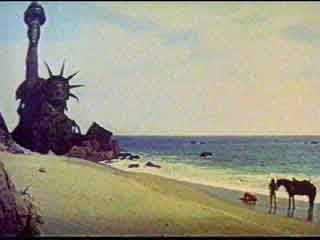
The movie opens to a spectacular monologue, delivered by Heston’s character, George Taylor, in which he details how he is the captain of a space ship who is out exploring the depths of space. Thanks to some scientific mumbo jumbo, Taylor reveals that while only a couple months had passed for the crew, over 700 years had passed on Earth, meaning that everyone and everything the crew once knew was dead and gone. Taylor then goes into deep sleep, and the film then cuts to one of the coolest opening credit scenes I had ever seen. The music was absolutely spectacular. The credits pass, and the ship crash lands on a planet which, Taylor muses, is about 300 light years from Earth. The crew, minus the one female member, survives the crash and travel through what appears to be a barren desert wasteland. Over the course of this trek, we learn much about the crew members and their personalities and motivations. Eventually, the crew comes upon life, and soon discovers a population of primitive humans. Taylor’s character muses that with life this primitive, in 6 months the crew will be lording over the planet. The reverie is cut short when apes riding on horses and wielding guns bust onto the scene, and soon start killing and capturing all the humans they can get their hands on. One member (naturally, the black guy) is killed, and the other two are captured. We soon learn that the humans on this planet are mute and stupid, and that apes have a very low opinion of humans on this planet. The next hour or so of film involves Taylor struggling to show to the apes that he is intelligent, and therefore should be treated as an equal. After some time, he is deemed a mutant and is set to be executed. After mounting a daring escape, Taylor, with the help of some sympathetic chimpanzees, flees to the so-called “forbidden zone” to find proof of intelligent humans existing before the apes. This proof is discovered, but the religious leaders of the ape society still do not want to accept that humans are equal to apes, and so the evidence is destroyed, though Taylor is set free. Taylor rides off, and, in one of the biggest twists in film, sees a half-buried Statue of Liberty, showing that he has been on Earth the whole time.

The cinematography and directing in this film is simply superb. Director Franklin J. Schaffner does a simply superb job with long sweeping shots, showing the viewer the true scope of the planet when the crew is travelling through the barren wasteland. I love the way the film goes from showing the individual actors, to cutting back to show the viewer the full scope of the region. It tells you more than any words can, and that is the scene of a truly great movie. Another excellent technique the film uses is quick jumps from mystery to blatant showing. What I mean, is best shown through the first scene in which the apes are seen. When the apes first start attacking the humans, we don’t see the apes for many minutes. All we can really see are the horses they are riding, and the tips of the threshers they are holding peaking over the corn fields. This continues for many minutes so that we don’t actually know what is chasing the humans, until, suddenly the film starts showing us. What I like about when they finally show us the apes, is that it is done very casually. The film suddenly goes from showing us nothing at all, to showing us the apes as though it’s been showing them to us the whole time. It’s very natural and done very well.

The acting in this film is…interesting to put it lightly. While there are some good scenes with the two other crew members, and the actor playing Dr. Zaius does a very good job for example, the focus is on Heston and his performance. What’s interesting about Heston’s character is that in any other actor I would call it gross overacting, and it really is. He’s hammy and cheesy, but the thing is, Heston has such a presence, such a gravitas that it really works for him. Though his delivery is on the whole very cheesy, it is actually remarkably compelling, and I actually really liked the cheese. What’s interesting is that many of the other characters are equally cheesy, ham and cheese would probably be the best description of the performances in this movie, but the thing is Heston as the large ham, and the movie’s over the top character just make the ham and cheese work, flat out.

Another thing about this film that really works is the makeup. The way in which real actors were rendered to look like apes in the days before green screen, before the days of Avatar technology, and before computer rendering technology is just really well done. You actually don’t realize that it really is a real human underneath all that hair.

The thing that really made the film for me though was the tension created throughout this film. Everything about this movie is exciting. From the chase scene in which Taylor and the crew are running from the apes, to Taylor’s dramatic discovery of the truth, you are constantly on the edge of your seat. What I like is that you really find yourself feeling for Taylor. You agonize over his inability to talk just as he does. You convince yourself that “if he could only just tell them who he is, then every will be sorted out.” What is more remarkable is that even though you know the truth, even though you know the ending of the film, you completely forget about it through the course of the film. It really is an excellent accomplishment.

With all this praise, however, I do have a couple complaints. One thing I didn’t like was the young chimp Lucius, who only comes into the film towards the end when Taylor escapes to the forbidden zone. I believe he is supposed to show the jaded, cynical youth of the chimpanzees, to demonstrate that the apes really are no different than humans, but he really just comes off as obnoxious, and I felt the film could have been much better without him. There were also a couple scenes that I felt were a bit superfluous to the film as a whole, for example Taylor’s first attempt at escape from town was way too drawn out, and if these scenes were cut down, the film as a whole could have been much better streamlined and paced a little better. However, these are really little more than nitpicks, rather than actual complaints.

Finally, the themes of this film are superb. This movie, at its most fundamental is on the first part about the importance of science, reason, and doubt, and also the importance of keeping science separate from religion. On the second part, the film is about the haughtiness of man, and a warning against the hubris of man being his major failing. One thing I find most interesting that best demonstrates this point is when Taylor finally reveals what the mission of the crewmen was. Their mission was a so called “Adam and Eve” played out in reality, in which the three male crewmen and one female would land on a new planet and repopulate human life on the new planet, with the idea of creating an Earth colony. When one thinks about this mission logically, they will immediately realize the idiocy not only of just sending 4 people on their own without communication to just arbitrarily find an hospitable planet to settle on, but to think that 3 men and 1 woman would be able to successfully create a new population. This mission shows that, in spite of Taylors sweeping anti-religious rhetoric, science and religion were blending on Earth as well. Finally, this movie is also about man’s penchant for destruction. One of my favorite lines in this film comes from the Orangutan cleric Dr. Zaius:

“Beware the beast Man, for he is the Devil's pawn. Alone among God's primates, he kills for sport or lust or greed. Yea, he will murder his brother to possess his brother's land. Let him not breed in great numbers, for he will make a desert of his home and yours. Shun him; drive him back into his jungle lair, for he is the harbinger of death. “

Finally, I can’t help pointing out the irony of Charlton Heston, today a major proponent of creation science and religious fundamentalism, in his youth doing a movie that is strictly anti-religion and pro evolution. Nevertheless this film is simply stupendous and definitely worth multiple watches. I am really glad I watched this film as rewatching it now has completely changed my opinion both of the movie and the series as a whole.
Read More
Posted in | No comments

Friday, January 7, 2011

#21 Seven Samurai (1954)

Posted on 5:52 PM by Unknown

Seven Samurai (1954)

"A brilliant epic"

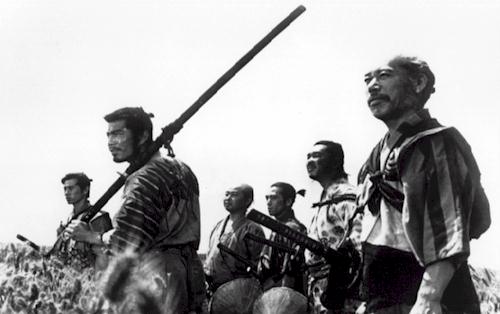
A defenseless village is beset by bandits, who vow they will return in several months’ time to finish the pathetic town off for good. With no soldiers or strongmen of their own, and no means to defend themselves, the hopeless villagers pool all the remnants of their money together and travel to the local town to try to hire a band of soldiers to defend the village for them. With their meager savings, the villagers manage to wrangle together a rag tag bunch of old, scrappy men who, against all odds, manage to finally hold off the attack, saving the village for good. This age-old story is one that is well known to just about anyone with access to a television or modern popular culture, and it is most well done in Akira Kurosawa’s brilliant 1954 film “Seven Samurai”. This epic is stupendously shot, brilliantly acted, and absolutely ranks among the best films of all time.

The story of the film is essentially what was listed above. A gang of bandits attacked a small, poor village, and decided that, since the village has already been raided, the bandits should return in several months’ time after the harvest to take whatever the villagers have left. Destitute and desperate, the villagers turn to the elder, who advise the villagers to travel to a nearby town to collect some samurai to defend them. After many short fallings and failure, the villagers manage to gain the allegiance of Shimada Kambei, a clever, wizened old samurai who has seen his fair share of battle. Through sheer force of will, Kambei manages to enlist the aid of 6 other samurai, all with their own select skills and abilities that make for a formidable force which manage to successfully stave off the numerous attacks of the bandits.

The film was directed by legendary Japanese filmmaker Akira Kurosawa, who was a monumental force not just in Japanese film, but in action film in general, creating many tropes, styles, and methods which would come to be staples in the Western and Action genres even up until today. You can see many of these styles today as the film is just spectacularly shot and directed. There are many cool scenes in this film. My personal favorite is when one of the samurai, Kyuzo duels with a challenger in a scene that has been copied so many times that it is certainly a cliché now. The two samurai stand opposed, gauging each other’s skills, each changing his stance periodically. Finally, the challenger makes his attack, and Kyuzo cuts him down with incredible ease. He then sheathes his sword and walks away. It was a powerful scene, made all the more poignant by the silence that encompasses the whole of it. I also love the minimalism of the film. Another thing I really like about the way the film is shot is the abrupt shifts from scene to scene. At first it’s a little jarring, but once you get used to it, the way Kurosawa shifts from saying what’s going to happen, to showing it happening is very artfully done, and on the whole makes the film all the better.

The film is not just well directed and shot, but is also very skillfully acted. Each of the samurai is very unique in their personalities, and it is all very well shown. From the quiet intensity of the master samurai Kyuzo (Seiji Miyaguchi), to the powerful leadership and gravitas carried by Shimada Kambei, played by Takashi Shimura, to the naïve optimism of Ohamoto Katsuhiro (Isao Kimura), to the doting, almost fatherly characteristics of Shichiroji (Daisuke Kato), all of these actors play their roles stupendously. The real show stealer of the movie, however, was the lowly peasant-born masquerading as a samurai named Kikuchiyo, who is played by the legendary actor Toshiro Mifune. Toshiro plays the role to perfection, showing the cynicism of the character, while also at all times displaying the deep seated loathing of the class from whence he came, and the constant attempts to be something he is not, it is all done so well, words cannot aptly describe the true skill with which this role is played.

What I truly love above all, however, are the themes shown in this movie. I watched this movie at the same time as I was taking a class on the history of the Tokugawa Era of Japan, a time in which the era of the samurai or more specifically, the ronin as is popularly envisaged was coming to an end, and that is what this movie encapsulates. This movie deals with pride versus honor, with the first couple samurai who were approached by the peasants turning the villagers down out of hand because they were peasants and had no money. The samurai who do take up the plight of the villagers, on the other hand, come to their aid out of pity for the villagers, in the case of Shimada Kambei or else a naïve ideal of honor and bushido, in the case of Ohamoto Katsuhiro, or finally, out of desire to fight and test ones skills, in the case of Kyuzo.

At the same time, the film investigates the plight of the villagers, who saw no difference between the robbing of their harvests by the bandits, and the robbing of their harvests by the bakufu, who refused to provide protection when asked anyway. However simultaneously through Kikuchiyo, we are shown that the “honest and defenseless villager” is not as defenseless and honorable as we are led to believe, though the villager is also shown to be justified in his actions.

Ultimately, however, the film is about the death of Japan, represented by the samurai. This film was released in 1954, which was in the thick of the postwar period, a time of deep shame and humiliation for the Japanese, who witnessed the emasculation of their once mighty empire, and their subordination to the Americans. All of these sentiments are displayed in the movie as the real losers in the film are the samurai; four of the seven are killed, but not just killed, but shot down by muskets, a symbol of advancement and changing times; the era of the sword was coming to an end. One of the survivors of the fight, Ohamoto Katsuhiro, the young, naïve, optimistic young samurai who idolizes the samurai he fights alongside throughout the battle, is left jaded and cynical by the senseless killing he witnesses, and by the loss of the love he finds in the village. Katsuhiro represents the jaded sentiments of the generation following the Second World War, and the true defeat of the Japanese people. The final line of the film, delivered by the other two surviving samurai, Shimada Kambei to Shichiroji is the most important:

Kambei Shimada: “So. Again we are defeated.”
[Shichiroji looks puzzled at Kambei]
Kambei Shimada: “The farmers have won. Not us.”

This truly is a remarkable piece of work, and is definitely one of the best I have seen so far. The wonderful directing, combined with the stupendous acting, bottled together into a wonderfully told story make for filmmaking magic. Though the film may seem long , coming in at nearly 4 hours, it is engaging for every minute of it, and by the end, I was at the edge of my seat. The film starts slow, but picks up momentum at such a rate that you hardly notice yourself falling in love with it. This movie is truly a must see for just about anyone, really.
Read More
Posted in | No comments

Wednesday, January 5, 2011

#20 Butch Cassidy and the Sundance Kid (1969)

Posted on 5:40 PM by Unknown

Butch Cassidy and the Sundance Kid (1969)

Sorry for the delay in getting the next movie on the list up again. I’ve been getting rather lazy lately, and I’m hoping to fix that now. Ideally I’m going to build up a nice reserve of movies reviewed so that making deadlines will not be so hectic to me (usually these reviews are being written literally 10 minutes before they are posted. Anyway, our movie for today is Butch Cassidy and the Sundance Kid, a western action- comedy starring Robert Redford and Paul Newman. Unfortunately, I’m writing this review a month and a half after having seen the film, but it’s still pretty firm in my mind. I’m just going to go ahead and say now that I really, really liked this film. The great chemistry between Redford and Newman, the excellent dialogue, and the interesting take on the “buddy cop” film genre (Which hadn’t actually started yet) that this movie plays at really are what make this movie one of the best I’ve seen off this list (I know, I say that a lot).

This movie takes place in the late 1890s during the Spanish-American War in, what is presumably the American Southwest. The Hole in the Wall gang, led by Butch Cassidy (Paul Newman) and the Sundance Kid (Robert Redford) are making a name for themselves as robbers of repute. The story starts with a sort of “silent film” which sets the story of the film, setting up the “legend of Butch Cassidy and the Sundance Kid”. The film then takes us straight to the action, with the two sitting in a saloon when they are approached by a man who challenges them to a duel, resulting in the Sundance Kid showing off his skills with a pistol. What I found interesting about this scene was that the whole thing was filmed in black and white, obviously trying to play itself into the classic “old west” films. The film then switches into color, and from there the movie starts to actually develop the story, with the two banditos robbing trains, then being chased across the southwest, then fleeing to the East, then fleeing to Bolivia, and trying to make ends me there. All the while the two of them are making snarky remarks at one another and vying for the hand of the romantic interest of the film – Etta Place, played by Katharine Ross.

One thing I really like about this film is the way in which the movie makes everything feel really surreal. You the viewer never truly feels that the two of them are in danger of being killed, even though that risk is great throughout most of the movie. The other thing I love about this movie is just how quotable it is. This movie has so many great lines, and the majority of my notes consist of writing down lines from the film.

As I’m implying above, I thoroughly loved the performances given by Newman, Redford, and Ross. Newman (The Brains of the Operation) and Redford (The skilled marksman) had such great chemistry together, and their timing and delivery of lines was absolutely stupendous. Everything about them in this film just flat out worked. I thought the direction of this film was also quite good. I liked the way the director George Roy Hill plays with different film methods, with the grainy silent film in the beginning, the shift to black and white, and then to color, and even more I liked the play with the montage about the trio’s experiences in New York, told through old-timey photographs. I also like Hill’s decision to not translate the Spanish used in the film when the trio travels to Bolivia, for those who don’t speak Spanish, it puts the viewer in the same position as the trio, facing a severe language barrier, and gives a nice bilingual bonus to those who do speak the language.

The Cinematography in this film is also stupendous, particularly the epic long shots in the film which really gives you a sense of the scale and epicness of the terrain that we’re talking about. The most striking scene to me is the last scene of the film, when Butch and the Sundance Kid run into what is essentially a firing squad when the military corners them in a small village in Bolivia. The shot is taken from the perspective of the army, taken far back, and you can see the two run out of the house they are taken cover in as the screen turns yellow, establishing two robbers as legendary figures, meanwhile in the background you can hear shots fired in unison multiple times.

The music in this film was also quite good. The mixture of western-ey sounds, with abrupt, almost random stops and shifts to different genres initially feels very scattered, but actually works very well with the film as a whole. Not to mention this film has that famous song “Raindrops Keep Falling on my Head” which is a very well known (and awesome) song .

This truly is an awesome film, and I imagine it is on the list for a number of reasons. The first I’d say, is for the film’s ability to blend comedy and action into a film that is truly entertaining from start to finish. The second is probably because of its great influence not just on film, but on pop culture (many of the lines in this film are still repeated, and who hasn’t sung Raindrops Keep Falling on my Head before?). This film is almost certainly on the list because of the incredible chemistry between Redford and Newman, two of the monolithic action/drama stars of that era, and the two of them together, working so well together, is probably one of the best male-male actor pairings of all time. Finally, I’d say that this film is on the list because, arguably, this is the first buddy cop film ever. Even though the movie is about banditos, the film really does lay down a lot of the tropes and characteristics that make up a buddy cop film, making it exceedingly influential as an important film. This truly great film really is a must see for everyone.
Read More
Posted in | No comments

Monday, October 25, 2010

#19 Rocky (1976)

Posted on 8:28 PM by Unknown

Rocky (1976)

"A distinctly American Film"

I’m back, baby. That’s right folks, I am not dead, and therefore the mission continues. We are 18 movies down, leaving only 1063 to go! And for our 19th movie we have a classic. This is one of the most referenced movies I’d argue in American film. Who hasn’t heard or seen the Rocky montage scene, with the big brass sound while he climbs those steps in Philadelphia, and if you haven’t seen that scene, who hasn’t seen another television show or movie make an homage to that scene? Now previous to last night, I had actually never seen the film, so these are my thoughts on the film without any previous experiences with it, so let’s take a look inside, eh?

The movie opens in a dingy boxing studio. Sylvester Stallone is boxing another man. The fight looks rough, neither of them is particularly graceful, but Stallone – Rocky – takes the man down. Rocky then retires to the dressing room where he takes a load off and nurses his wounds, beside him is another man doing likewise. Rocky gets 40 dollars, after fees, for winning the fight. It is at this point the credits roll, which I find very interesting. Behind the credits we can see Rocky walking through the dirty, dingy streets of Philadelphia. He enters his home, and the scene does not appear much better. It becomes apparent that Rocky is a working-class man, the pinnacle of Philadelphia-ness. He has a crush on a woman – Adrian – who is a very plain and shy woman who works in a pet shop he frequents. Most of his time is divided between his jobs – he works as hired muscle for a loan shark, and training in a boxing gym. Even at this gym he is not respected, as he loses his locker, a spot he’s held for 6 years, just because an up and coming stud needs one. Rocky’s trainer tells him “You’re not a contender, you’re a tomato”.

Rocky looks up to a man named Apollo Creed, who is the heavyweight champion of the world. Creed wants to have a bicentennial fight on new year’s eve, 1976, but his opponent has to bow out 5 weeks before the fight. Due to contractual and advertising obligations, Creed cannot afford to cancel the fight, so he comes upon a brilliant idea – he decides to select an unknown, unprofessional fighter to contest him. Ultimately he comes upon the name of Rocky, who he ends up selecting not for skill, or record, but for name – The Italian Stallion – a name he thinks will be easy to sell to the people. His coach even warns him against it, due to Balboa’s left-handedness, something Creed shrugs off with ease.

Upon his selection, Rocky is instantly beset upon by those who once derided him. People that scoffed at him now want his autograph, want to be his friend, and want to help him. The two that come to the forefront are his trainer, who sold out his locker and once called him “a tomato”, and Paulie, a friend who was really little more of a leach, trying to use Rocky to get him a job. He’s also important because he’s the brother of Adrian, the girl from the Pet shop who Rocky begins to date just previous to his being selected to fight. Ultimately Rocky ends up humbling the two with loud outbursts, but eventually accepts their offers of help.

What I found truly interesting during the training portions of the movie are the stark differences between Rocky Balboa and Apollo Creed. Rocky is a humble, working class man, his speech is ungrammatical and plain. He’s not a particularly well trained fighter, with more guts than stuff. But also with Rocky is a good sense of morality. He shows concern, not just for his friends, but for anyone he comes across, trying to prevent a neighborhood girl he knows from falling in with the wrong crowd, helping a drunken man by taking him inside to keep him out of the cold. At the same time Rocky is proud, he takes personal insults extremely personally, lashing out at anyone who implies some bad mark on his character. This translates to his reasoning behind fighting. Rocky doesn’t fight for money or fame, as he tells Adrian on a date, but he does it to show that he “ain’t no bum”, to tell everyone that he’s not a nothing. Winning or being famous is irrelevant. In essence, Rocky encapsulates the working man. Creed, on the other hand, is the exact antithesis to Rocky in every way. He’s very well spoken, displaying a penchant for the flowery in prose. He’s also very greedy, and extremely arrogant. The fact that the man shows arrogance while having a Greek name is no coincidence, his hubris is the stuff of Greek tragedy, the most stark example coming when his trainer is watching videos of Rocky, and warning Apollo that Rocky means business, something that Apollo shrugs off. What’s more is Apollo’s reason to fight. He fights for wealth, he chooses his opponent because “it sounds catchy and is easy to sell”. What’s more remarkable is that most of the scenes with Rocky display him training, and training hard, the only scenes we see of Apollo is lounging about, or interacting with advertising men.

Anyways, Rocky sets to training and gets into shape. The famous montage happens and we see Rocky climbing stairs with ease. What I found more interesting was the scenes afterwards. Rocky visits the stadium the night before the fight, where he’s met by the fight promoter. Rocky tells the promoter that they got his picture wrong, referencing a depiction of him in the stadium. The promoter says, “Doesn’t really matter kid, so long as you give us a great show”. This scene results in the self-doubt moment common in the hero’s tale. Rocky is unsure that he wants to go through with the fight as he realizes that the whole thing is a sham, and he’s not going to win. Eventually his girlfriend Adrian spurs him to give it a shot.

As the two fighters prepare for the match, both prepare in exactly the same way, showing that at heart they are the same. The entrances, however, are very telling. When Rocky enters the fight, he’s very unassuming. He enters, flanked by his manager, signs a couple autographs, before stepping into the ring. Apollo, on the other hand is gaudy, and showy, as he enters dressed as George Washington in a mockery of the crossing of the Delaware. He then changes into a costume portraying himself as Uncle Sam, saying that he wants Rocky, and claiming he will go down in three rounds. Even the announcers are surprised by the showmanship of Creed, saying “I’ve never seen a fighter that concerned about his hair.”

So the fight starts. On the whole, Rocky gets pushed around, and beat up, though he gets some good hits. The third round comes and goes, and things remain largely the same, with Rocky getting punched around, but still getting some good hits on Apollo. As they go deeper and deeper into the fight, it appears to be much more equal blow for blow, and by the 15th round both men are on their last legs. The fight ends with both men still standing. Apollo grabs Rocky and says “There won’t be no rematch” signaling that he has been humbled by the fight, and Rocky says he doesn’t want a rematch. In the end, Rocky loses the fight, but it’s not really made a point, we never see Apollo being crowned the victor. Rather, we see Adrian fighting her way through the crowd, eventually reaching Rocky. The movie ends with the two kissing.

On a technical level, the movie was not particularly impressive. While the montage was absolutely brilliant, I didn’t think anyone’s acting was particularly spectacular, nor was the direction anything especially impressive. What I did like was the dialogue, and I thought Sylvester Stallone was well cast as his mumbling and garbled lines actually lend themselves to Rocky’s character. No, this film is more about ideas – the stark contrast between Rocky’s low class humility, and Apollo’s rich, capitalist hubris. Rocky is at its core what being an American is all about. Rocky is a foreigner – an Italian before an American – he’s poor, he’s humble, and most importantly, he’s normal. Both he and his girlfriend aren’t particularly attractive, and they both have hang-ups. When asked why he’s dating Adrian he says “We fit together, we fill gaps”. But the movie is at its core about a down-on-his-luck working class man being faced with an insurmountable opposition, and rising to the challenge, and, through hard work, training, and just plain guts, he rises to face the challenge. That Rocky loses is irrelevant. Rocky doesn’t need to win, he doesn’t fight to win, he fights to prove that “he ain’t no bum”, he fights to show that he shouldn’t be dismissed, and at the end of the movie, he accomplished this, and the movie accomplished this. The movie is nothing spectacular, but the ideas entailed in the movie are, and that’s why this movie is on the list.
Read More
Posted in | No comments

Friday, June 4, 2010

#18 Bram Stoker’s Dracula (1993)

Posted on 11:04 PM by Unknown

"A star studded, but ultimately disappointing film"

Our final Dracula movie this week is the Francis Ford Coppola film “Bram Stoker’s Dracula”. This is one of the more recent Dracula films, and the one I am most familiar with. While my reviews of Dracula and Nosferatu were my first screenings of those films, I have seen this particular film several times, the first of which being 5 years ago after I read the original novel. At first viewing, I rather liked the film, I was 14, and this movie was gory, erotic, and generally cool. Now, after having seen this film again, with perspective, and with a different sense of good and bad, I have different sentiments about this film.

The story in this film is the closest to the story of all of the movies here. The story begins with a prologue of sorts. It talks about where Dracula came from, how he was a Hungarian prince, who defends against the incursions of the Ottoman Turks. During the battle, his wife, his one love in the world, receives false information suggesting Dracula died in battle, and so, wracked with grief, she throws herself off a cliff. When Dracula finds out what happened, he forsakes god, and in the process, turns himself into a vampire. Cut to 1890s England. Jonathan Harker (Keanu Reeves) is told by his boss to travel to Transylvania to close a deal with one Count Dracula, who has been buying up property around London. The rest you’ve heard three times now, and this film is essentially the same thing, just with more sexual moaning, more nudity, and more blood. The only other difference is Dracula is made more human, and there’s a love story between Mina and Dracula that plays a much bigger part. One thing I do like about the film is that, like the books, the film is told largely through diary entries, which I thought was a very cool effect.

I found the acting in this film to be rather spotty. On the one hand, Gary Oldman as Dracula is absolutely stupendous, one of the best Dracula performances ever. Keanu Reeves, on the other hand, is not so good. As always, Keanu Reeves is completely bland and uninteresting. Winona Ryder I found to be off and on. Sometimes she’s good, and other times she’s very campy. And Anthony Hopkins as Van Helsing I found to be silly. I cringed every time I heard him say “Ja”. The shooting is absolutely stupendous. There are a lot of cool shots, and a lot of cool effects in this film: scenes such as Dracula climbing down the castle, and effects such as Dracula being green mist, or the shots with the old fashioned camera.

On the whole, I did not like this film. This is actually the first of the films on the list that I didn’t really like. That’s not to say the film is bad, I just didn’t find it good, especially compared to the other two Dracula movies. One thing that truly annoyed me about this film is the gratuitous nudity in the film. And don’t even get me started on the sexual moaning. This film definitely could pass as a porno, and when I’ve been watching a lot of movies that do these stories great without blood, violence, or nudity, it just feels excessive. Why is this film on the list then? I think it’s because of all of the big names in this film. Reeves, Ryder, Hopkins, and Oldman, added to by the biggest of all of them, Francis Ford Coppola, that legendary director. This, if anything, is the reason why, I feel at any rate, that this film is on the list.
Read More
Posted in | No comments

Wednesday, June 2, 2010

#17 Dracula (1931)

Posted on 10:57 PM by Unknown


Although the connotations of the concept and name “vampire” have changed massively in the last decade, especially with the advent of the popular book (and film) series “Twilight”, when I was a kid it was rather different. Vampires were something to be feared, to me anyways, they were scary, horrifying even. And the image that came to mind when one thought of Vampires was that of Bela Lugosi’s Count Dracula; pale, regal, with a costume from the late 19th century, and piercing, striking eyes. This is the image of Dracula that has pervaded for what is now nearing on a century. It is a testament to the greatness of this film, and the great acting ability of Bela Lugosi.

This film, like Nosferatu, is quite true to the original novel. Unlike Nosferatu, however, this film features the actual character names. The story opens to a sequence that is rather similar to Hutter traveling to visit Orlok in Nosferatu. This time, Renfield is traveling to arrange a deal with Count Dracula. The whole sequence is rather spooky, and culminates in Dracula himself. Dracula talks to Renfield about buying the abandoned Carfax Abbey in London. After this is concluded, Dracula hypnotizes Renfield, and feasts on his blood.

The scene then cuts to an opera, where we are introduced to the main characters, Mina, Harker, and Lucy, accompanied by Dr. Seward. Dracula comes to the box, and the characters all become acquainted with one another. Later that night, Dracula visits Lucy and feasts on her blood, resulting the next day, in Lucy’s death after a series of failed transfusions. Meanwhile, Renfield has also returned to England, but has been institutionalized as his experience with Dracula has obviously driven him insane, and he rants endlessly about blood and life, primarily the lives of flies, spiders, and other arthropods. After befuddling the doctors, an expert is consulted, on Dr. Van Helsing, who, after interviewing Renfield, confesses a suspicion that a Vampire is to blame. A few nights later, Mina starts succumbing to the same illnesses Lucy showed. Van Helsing again lends his expertise, and through a series of stratagems, he proves to all that Count Dracula is a vampire. Despite all of his ensuing guiles after this dramatic reveal, Van Helsing and Harker eventually track Dracula to his lair in Carfax Abbey, and kill him while he sleeps, by driving a wooden steak through his heart.

The acting in this film is stupendous. Bela Lugosi is Dracula. He plays the role so well, and so true to the novel. He isn’t a monster, or grotesque, as described in Nosferatu, but a regal, suave, and smooth Count, who is quite capable of fooling and seducing just about everyone he meets. Bela’s accent, his delivery, and his gaze make this a truly stunning role. He isn’t the only great act in this film however. Renfield, played by Dwight Frye, also gives a spectacular performance. His portrayals first as a bumbling salesman put out of his element, and later as a deranged psychopath are equally compelling, and really add a lot to the film. Finally, Edward Van Sloan, who plays Van Helsing, also gives an excellent performance as the primary protagonist to Dracula’s antagonist. You feel yourself shouting “no!” when you see Bela Lugosi nearly lead him astray, only for him to flip the crucifix, and for you the viewer to release a sigh of relief.

The camerawork is also quite well done. The director Tod Browning has a lot of close ups, particularly on Bela’s Eyes, and on the little, insignificant insects that captured Renfield’s passion, and these are well done. Another great shot is the one of Renfield looking out of his cell door, and onto the field, where he sees Dracula standing, waiting. Another, equally great shot is the one at the end of the film, in which Dracula pushes Renfield down the stairs. These scenes are compelling, and you feel sorry for the deranged Renfield.

This film truly marks the start of the “monster genre” that dominated Hollywood and inspired viewers for another two decades, instigating other great monsters, such as Frankenstein, the Creature of the Black Lagoon, and the Wolf Man. I wanted to do a week of monster classics, featuring Frankenstein, Dracula, and The Wolf Man, but neither Frankenstein nor Wolf Man were available on Watch Instantly, and moreover, a Dracula week was just too tempting. But I digress. This film is on the list simply because of what it did for film, and for the horror genre. This film really popularized Vampires, and provided an archetype from which all other vampire films were based. It established a lot of vampire tropes. And seriously, when you think of Vampires, the first thought that pops into your head, I can guarantee you, is that of Bela Lugosi, the king of Vampires.
Read More
Posted in | No comments
Newer Posts Older Posts Home
Subscribe to: Posts (Atom)

Popular Posts

Categories

  • Citizen Kane
  • Clint Eastwood
  • Dirty Harry
  • Duck Soup
  • film reviews
  • great movies
  • Marx Brothers
  • Orson Welles
  • Rosebud

Blog Archive

  • ▼  2011 (22)
    • ▼  October (2)
      • #41 Sherlock Jr. (1924)
      • #40 Our Hospitality (1923)
    • ►  April (1)
    • ►  March (1)
    • ►  February (6)
    • ►  January (12)
  • ►  2010 (20)
    • ►  October (1)
    • ►  June (2)
    • ►  May (10)
    • ►  April (7)
Powered by Blogger.

About Me

Unknown
View my complete profile